
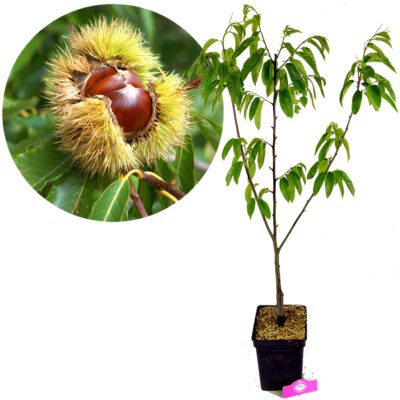
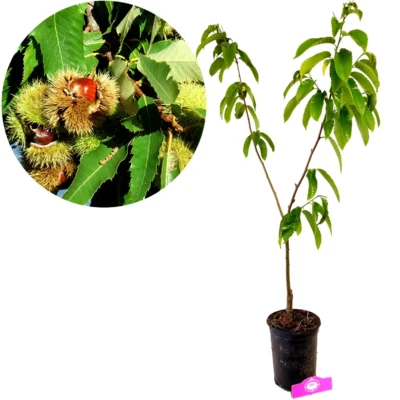
Chestnuts are vigorous trees with longevity and a robust appearance. They are known for their characteristic leaves, striking blooms and harvest of edible nuts. Chestnut trees look best in spacious gardens, yards or in an orchard, where they can grow into full-sized trees. All chestnuts are grown with care and delivered directly from the grower, so you are assured of strong plants with healthy root development.
Showing all 4 resultsSorted by popularity


Planting and start
Chestnut trees are preferably planted in autumn or early spring. Provide a spacious planting hole and loose, well-drained soil to allow the roots to develop deeply. Water sufficiently after planting to promote good rooting.
Stand and soil
Chestnuts like space and light.
- A sunny to slightly shaded position is ideal
- Deep, well-drained soil prevents wet feet
- Slightly acidic to neutral soil promotes healthy growth
Care during the year
- Water during prolonged drought, especially on young trees
- Mulch around the trunk helps improve soil structure and retain moisture
- Light fertilisation in spring supports growth
Pruning and maintenance
Chestnut trees require little pruning.
- Prune only if necessary and preferably in summer
- Remove dead, damaged or crossing branches
- Give the tree enough space to maintain its natural shape
With proper care, a chestnut tree grows into a strong, characterful tree that will be a valuable addition to the garden for generations.