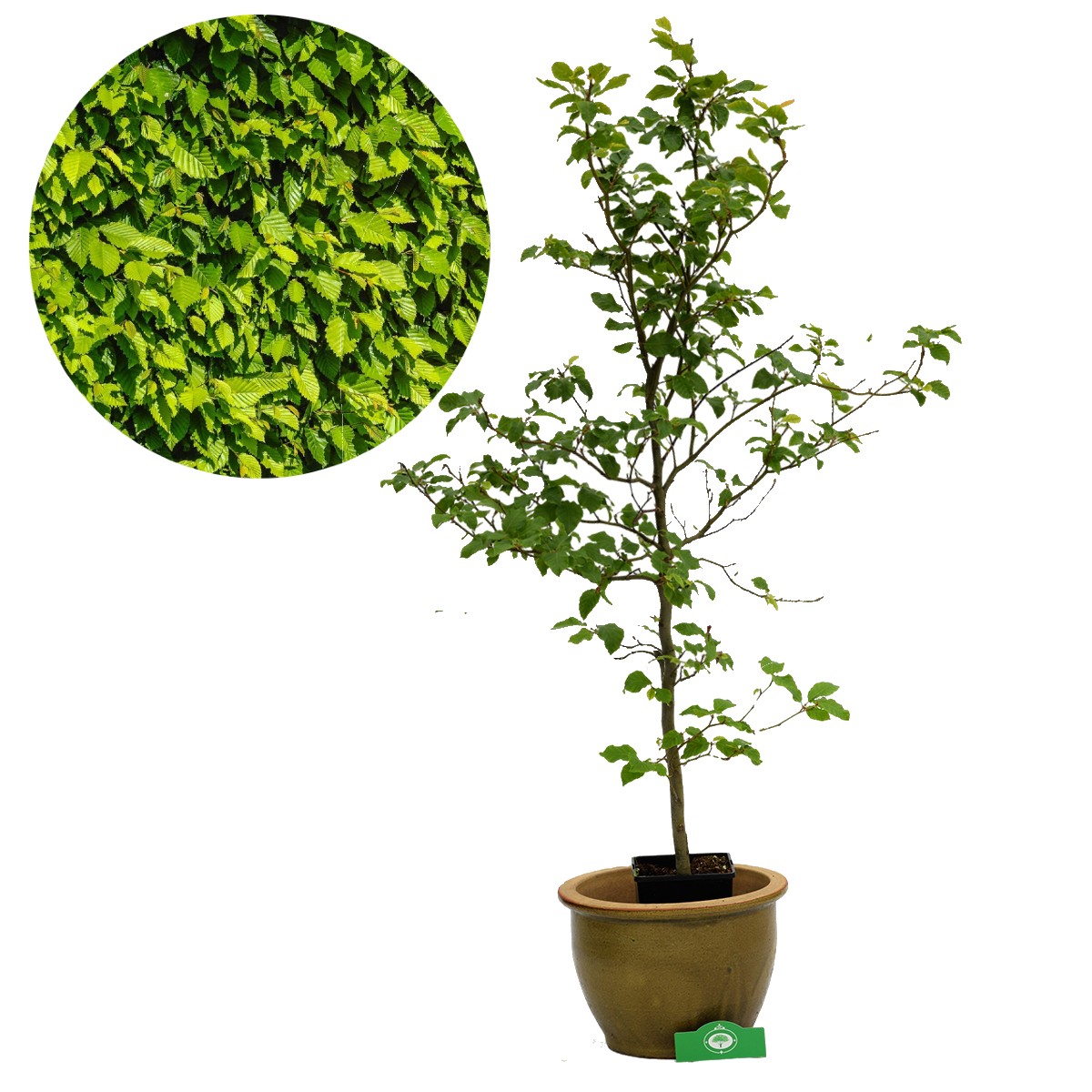
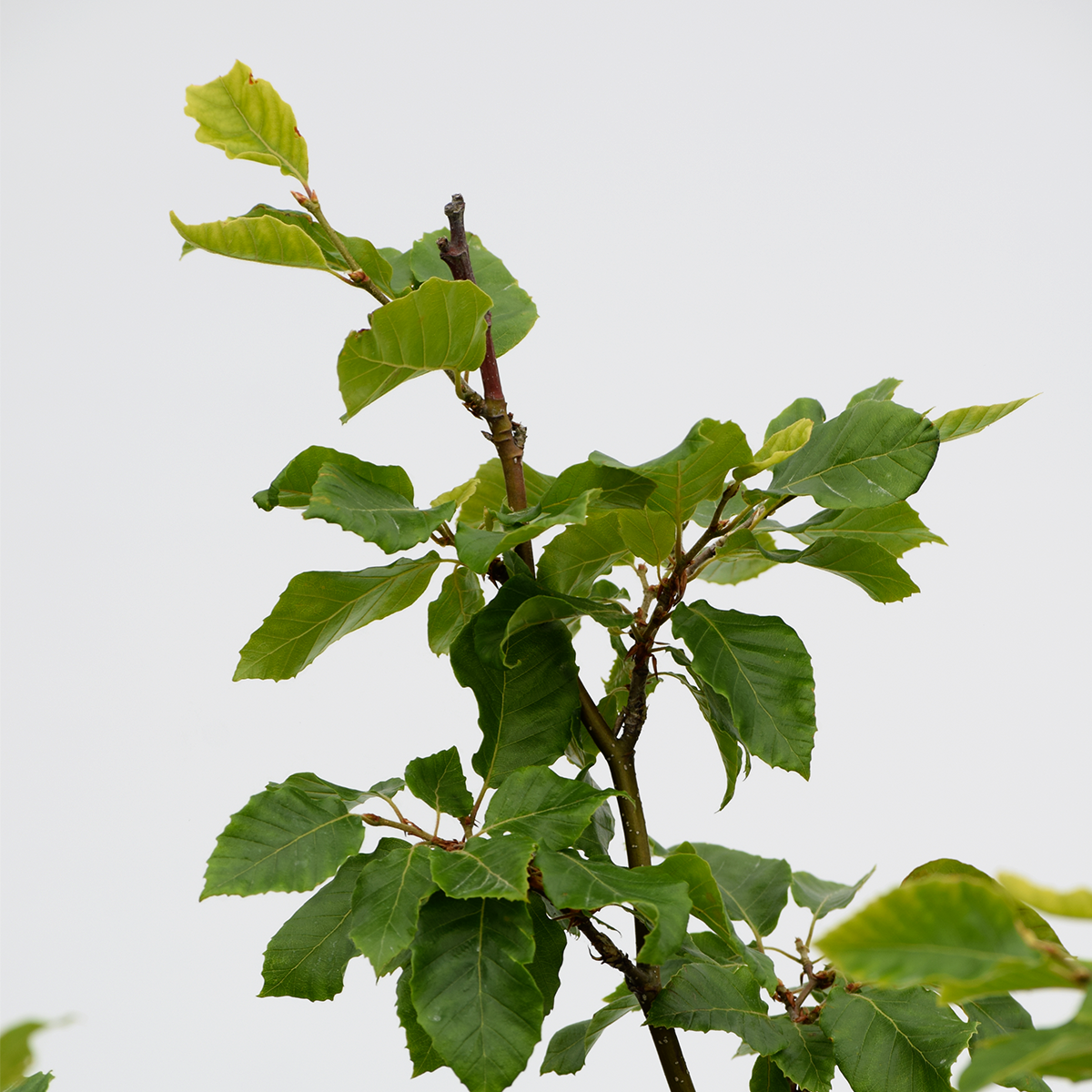
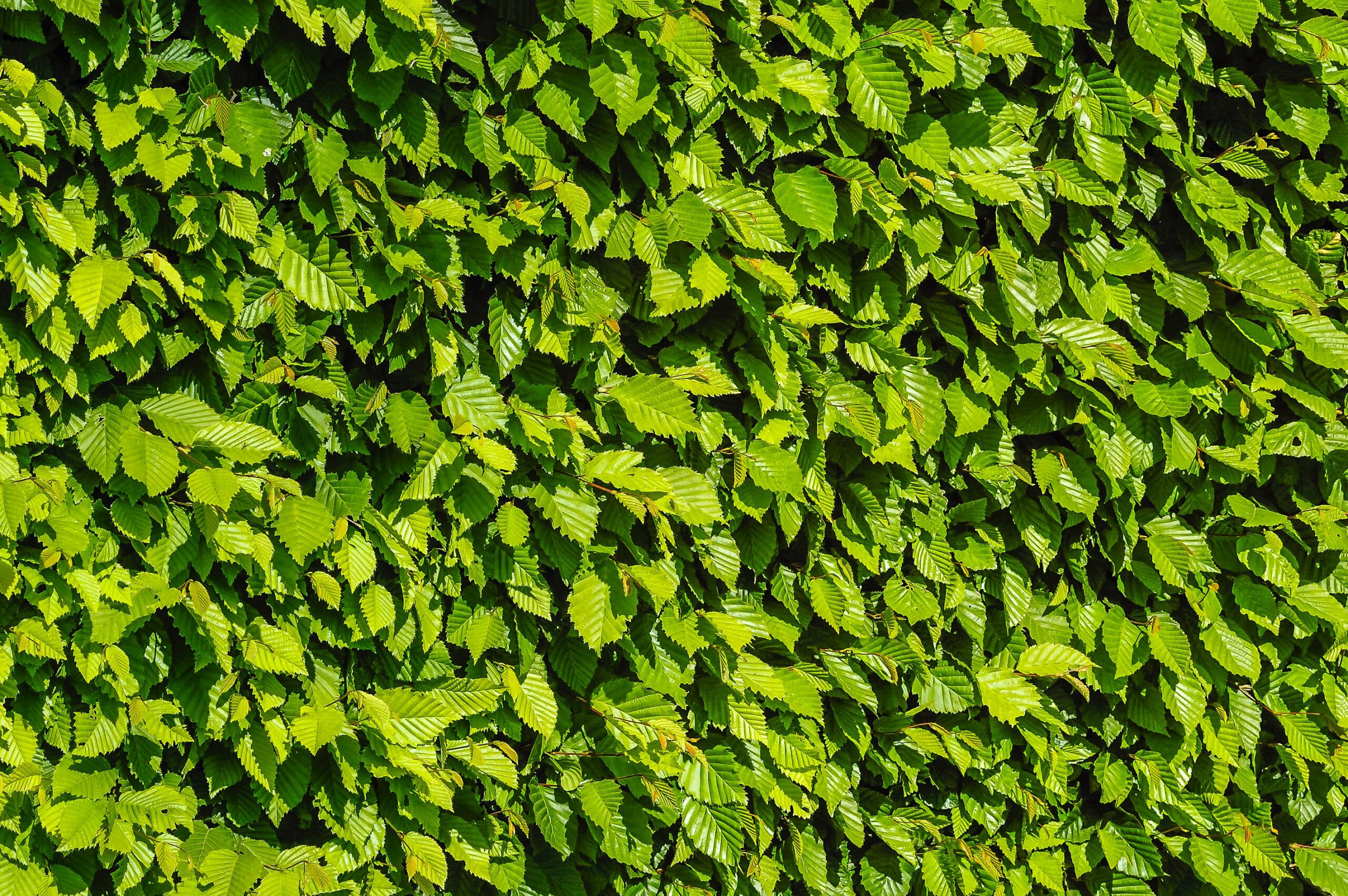
Fagus sylvatica, the European beech, is a classic hedge plant with fresh green spring foliage and warm copper-brown autumn colours. Regular pruning creates a dense hedge that provides a lovely boundary for the garden. A pruned beech hedge often retains much of its withered foliage until the new leaves appear in spring.
Why choose a green beech hedge?
- Fresh green foliage in spring and summer.
- A copper-brown autumn leaf that often lingers for a long time.
- Suitable for low and high-trimmed hedges.
- A hardy, native tree species that is easy to maintain as a hedge.
Contents of this product
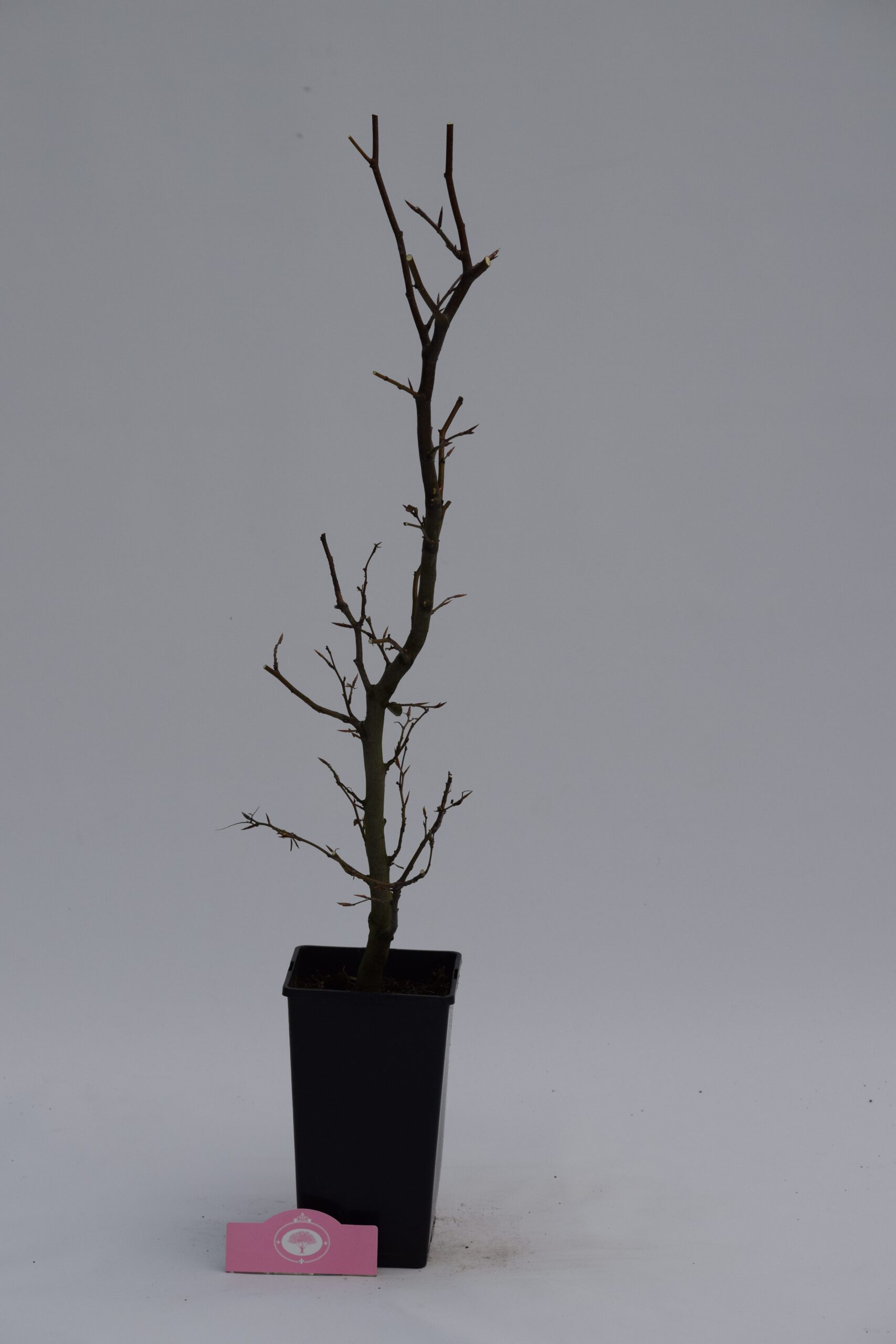
- 1 x Fagus sylvatica
- Pot size: 2 litres
- Height on delivery: approximately 80–100 cm (approximate)
Plants are natural products. Height, branching and the number of leaves may vary from plant to plant and from season to season. We cannot guarantee that the plant will be in flower or bearing fruit upon delivery.
Beech and leaf retention
Fagus sylvatica is the beech; the hornbeam, Carpinus betulus, is a different species of tree. The beech is deciduous and therefore not evergreen. On young shoots and pruned hedges, the brown foliage often remains on the tree for much of the winter. The amount of foliage that remains depends on the wind, pruning and location. If left unpruned, a beech will grow into a large tree, so regular hedge trimming is important.
Stand and soil
Choose a sunny or semi-shaded spot with nutrient-rich, well-drained soil. Beech trees do not thrive in root zones that remain waterlogged for long periods or lack oxygen. Before planting, loosen the entire hedge area and remove any weeds. On heavy, wet soil, drainage must first be improved. Bear in mind competition from existing trees and hedges.
Planting and watering
Moisten the root balls thoroughly and plant them at the same depth as in the nursery pot. Water generously after planting. Do not let the roots dry out during the first growing season, particularly during hot and windy spells. A layer of mulch helps to retain moisture; keep this a short distance away from the stems. Container-grown plants can be planted as long as the ground is not frozen or waterlogged.
Pruning to create a dense hedge
A maintenance trim in late summer keeps the hedge in shape and helps to preserve young foliage during the winter. If growth is vigorous, you can trim it back a little earlier in the summer. Make the base slightly wider than the top to allow sufficient light through. Before trimming, check whether there are any active birds’ nests in the hedge and leave them undisturbed.
Aftercare following planting
Keep the ground around the hedge free of grass and weeds, so that the young plants face less competition for moisture. Add some compost each year and only fertilise as required. The height stated is for guidance only; branching and foliage vary from plant to plant and from season to season.


 Free Free home delivery from €60,- Minimum order of €15!

 Nederlands
  Deutsch
 Dansk
Dansk
 Français
 English (UK)
 Svenska
