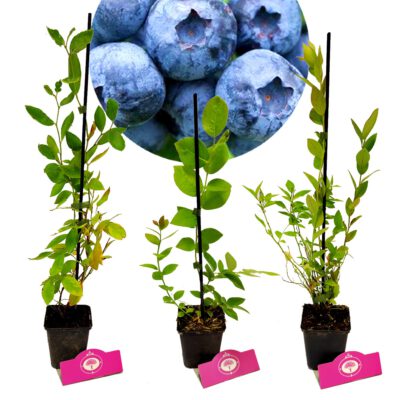
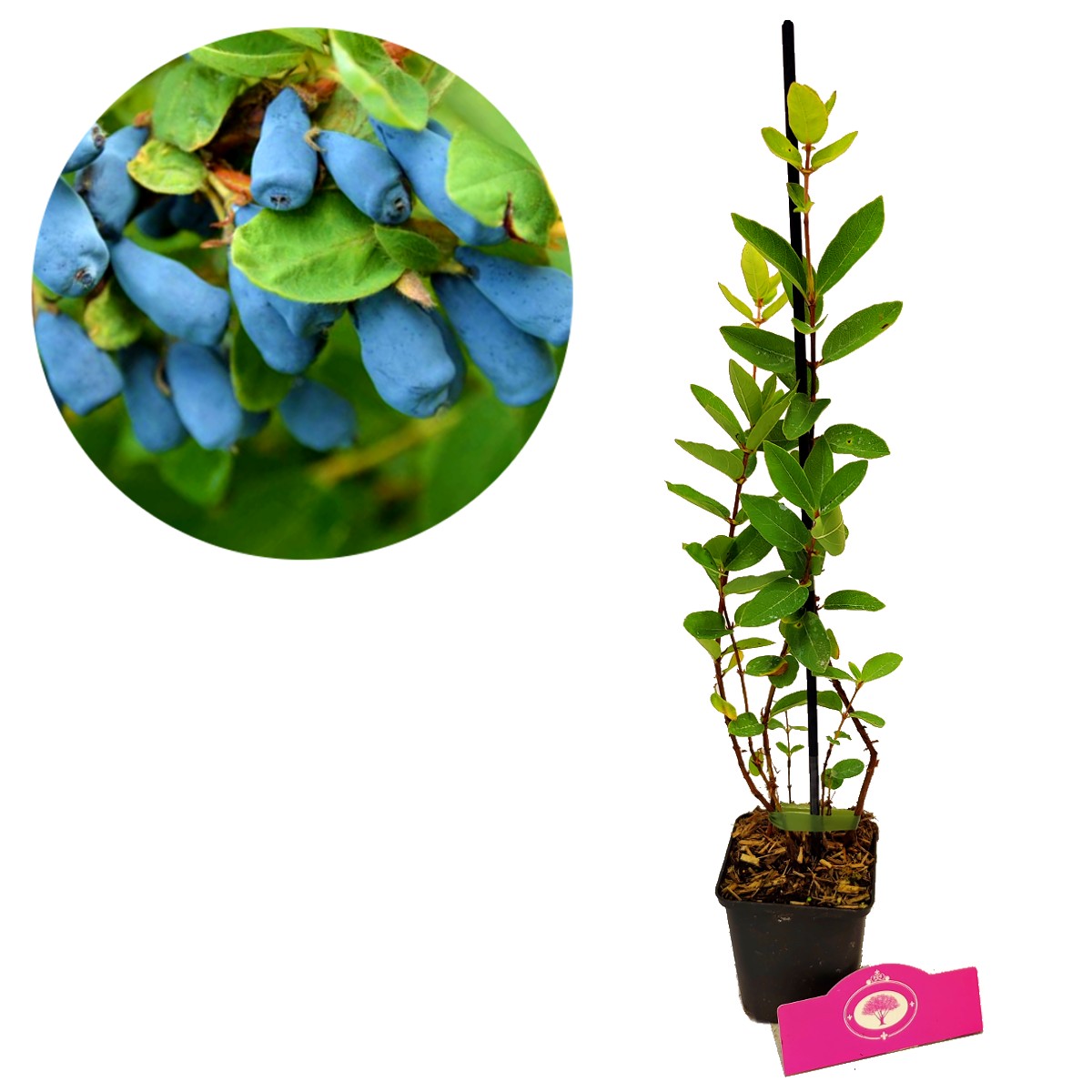
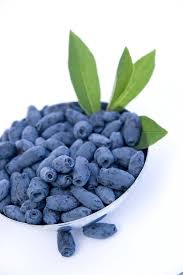
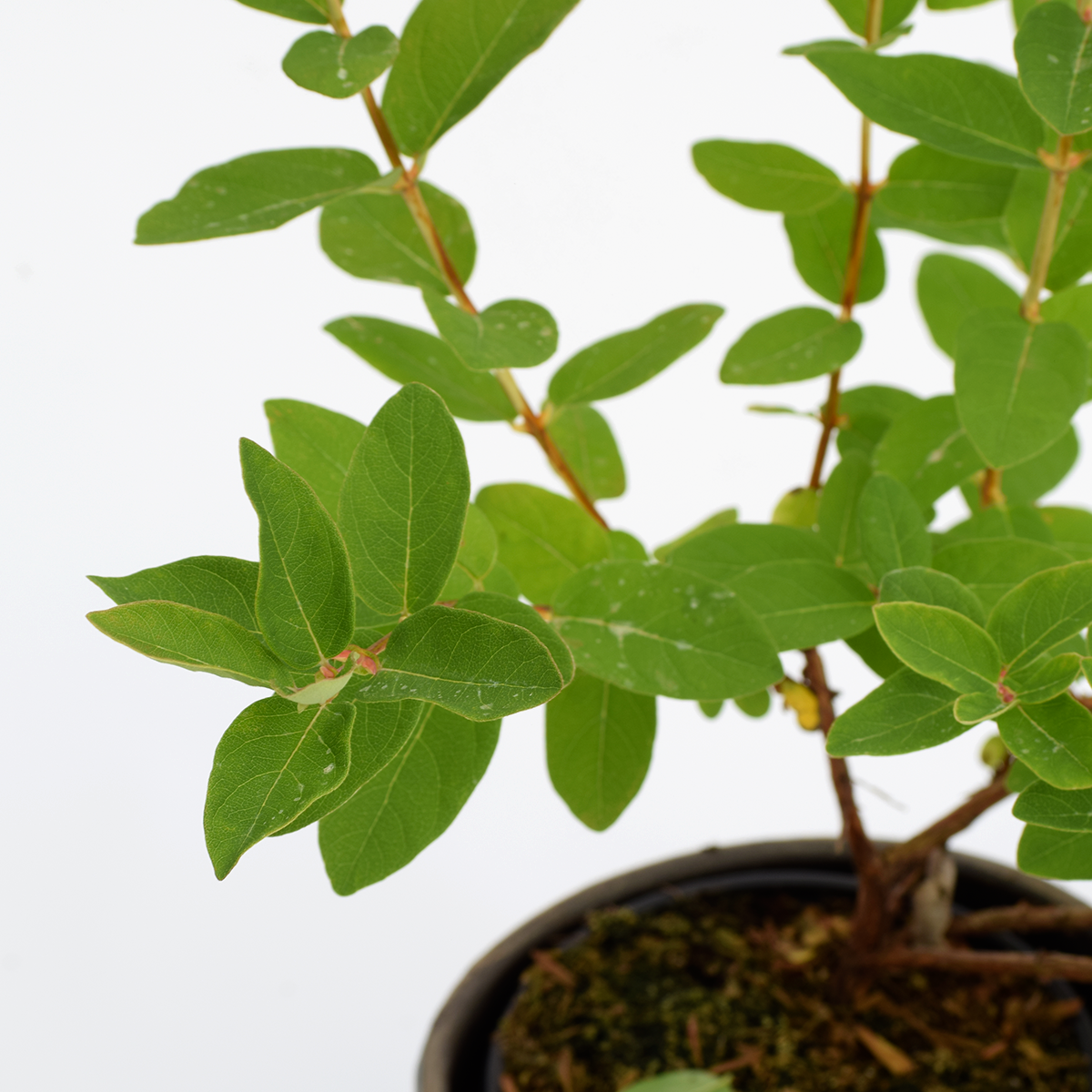
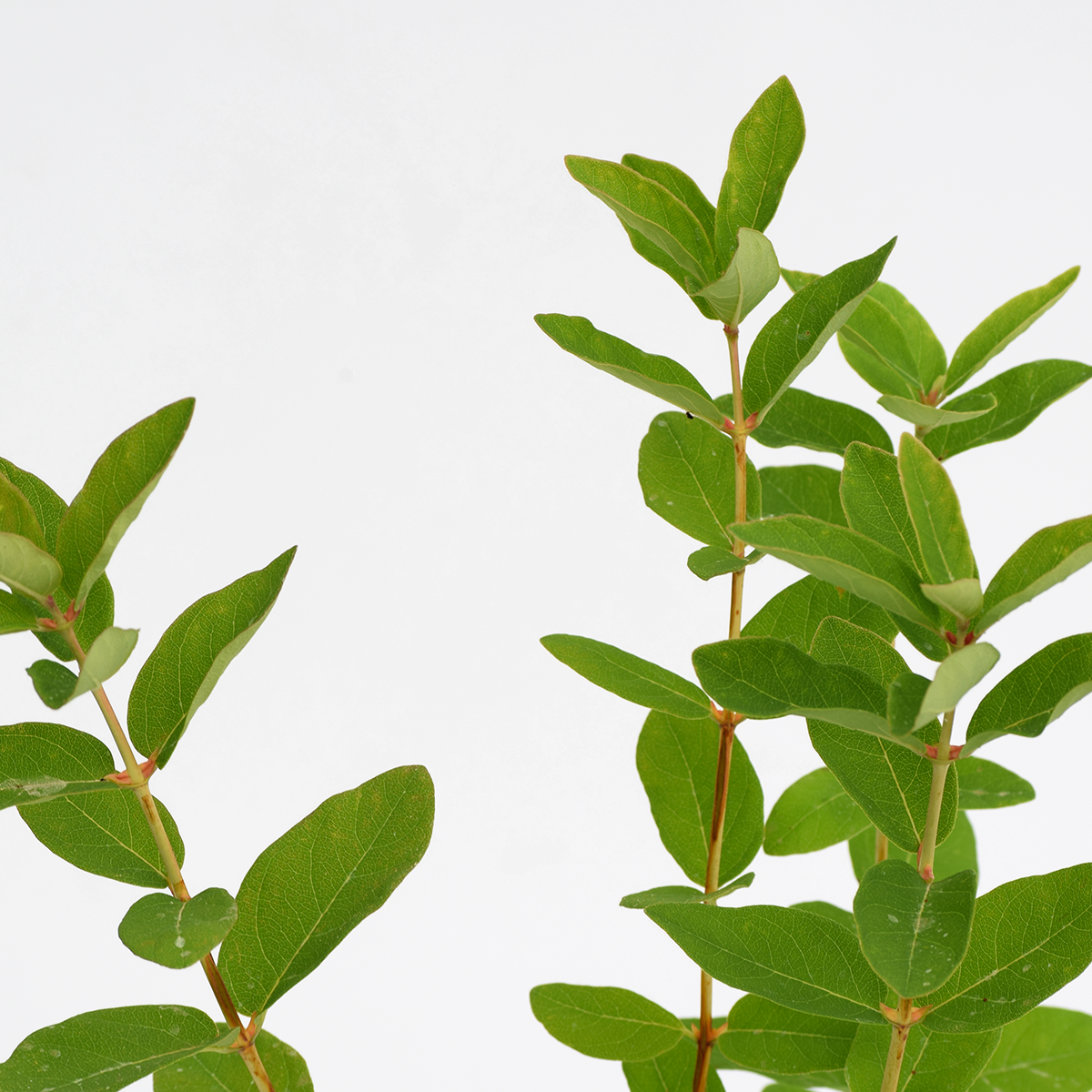
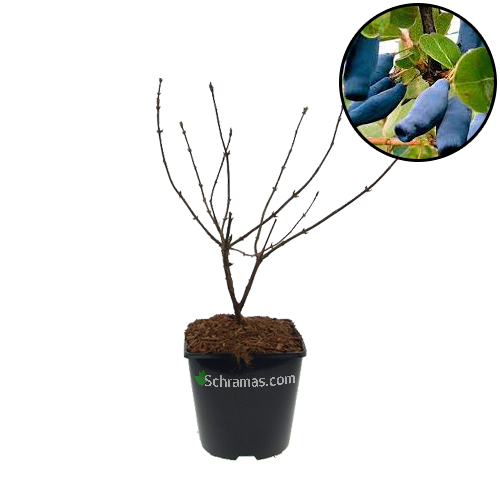
With this set of three Lonicera caerulea ‘Larisa’ honeysuckle plants, you can create a small fruit bed or a single row of honeysuckle bushes. The elongated, blue-purple fruits ripen early and have a fresh, aromatic flavour. The plants are young and will continue to grow after planting into sturdy, deciduous shrubs.
Why choose this set?
- Three young honeyberry plants of the ‘Larisa’ variety.
- Early fruit to complement summer fruit.
- Suitable for an edible border or vegetable garden.
- Highly hardy and attractive to early pollinating insects.
Contents of this product
- 3 x Lonicera caerulea ‘Larisa’
- Pot size: P9, approx. 9 cm
- Height on delivery: approximately 20 cm including the pot (approximate)
Plants are natural products. Height, branching and the number of leaves may vary from plant to plant and from season to season. We cannot guarantee that the plant will be in flower or bearing fruit upon delivery.
Growth, flowering and berries
The shrubs can eventually grow to a height of around 150–180 cm. In early spring, small, pale-coloured flowers appear, followed by elongated fruits. Harvesting usually takes place in late spring or early summer. Allow young P9 plants time to establish their roots and develop a sturdy branch structure first; a large harvest immediately after planting is not guaranteed.
Three plants, one variety
This set contains three plants of the same variety. To ensure good cross-pollination, add another honeyberry variety that flowers at the same time. Having several ‘Larisa’ plants does not replace the need for this additional variety. When planting, bear in mind the mature width so that you can easily tend to and harvest the bushes later on.
Pollination for a good harvest
It is best to plant another variety of honeyberry with overlapping flowering times nearby. Cross-pollination is important for good fruit set; two plants of the same variety do not provide the same benefit. Early-season bees and bumblebees help with pollination. Young bushes need time to develop before yields increase.
Location and planting
Choose a sunny spot or light partial shade with humus-rich soil that retains sufficient moisture but drains well. Honeyberries do not require particularly acidic soil, unlike blueberries. Moisten the root ball thoroughly, plant at the same depth as in the nursery pot and water. Avoid a hot, dry spot where the soil dries out quickly.
Water and maintenance
Water during dry spells, particularly in spring whilst the fruit is developing. A layer of mulch helps to retain moisture in the soil. Prune young plants sparingly. After the harvest, remove dead, weak or crossing wood, and gradually rejuvenate older bushes by cutting back a few old branches low down. Retain sufficient new growth for future harvests.
Winter and harvests
The honeyberry is very hardy and loses its leaves in winter. When grown in pots, protect the roots from prolonged severe frost. Wait to pick the berries until they are fully coloured and ripe on the inside; a blue skin alone does not always mean that they are already sweet. If necessary, protect ripe berries from birds using carefully stretched nets.
Use of the fruits
Eat fully ripe berries fresh or use them in yoghurt, jam or compote. The flavour becomes sweeter as the fruit ripens further. You can also freeze them, so that you can use part of the early harvest later on.

 Free Free home delivery from €60,- Minimum order of €15!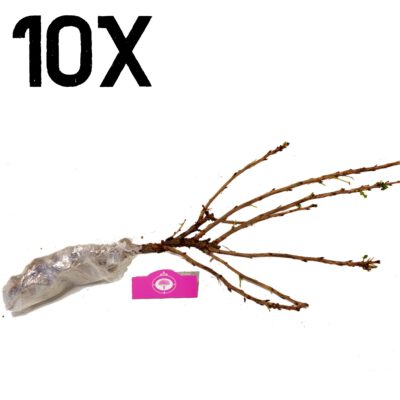

 Nederlands
 Deutsch
 Dansk
Dansk Français
 English (UK)
 Svenska